Where the inspection starts
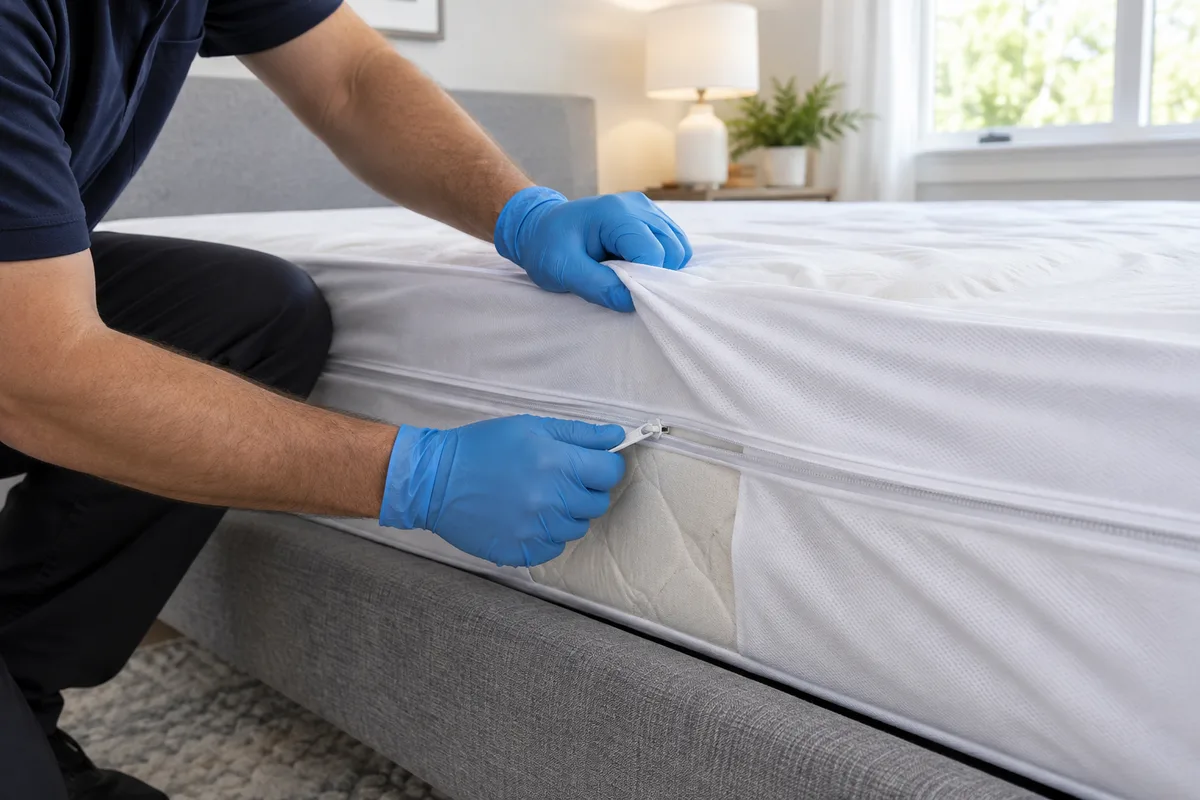
Mattress seams, bed-frame joints, and upholstered furniture are places an inspector may examine. Tell them where you first noticed signs and whether nearby rooms are affected. Looking at the surrounding room helps build a clearer picture than checking one item alone.
What treatment can involve
The plan may combine vacuuming, steam, mattress encasements, monitoring, or an appropriate labeled pesticide. The choice depends on the item and the inspection findings. Encasements can be useful, but they are not a complete room treatment on their own.
Do I need to throw away the mattress?
Not necessarily. Discuss the condition of the item and the treatment options before replacing it. Avoid moving suspected items into another room while you wait for advice, as that can spread the problem.
Getting a furniture-treatment quote
List the items you’re concerned about, their size, and where they are located. Ask whether the quote includes the room around them, any encasements, and follow-up checks. This makes it easier to understand the full cost rather than just a price for one item.
A few common questions
Can a sofa be treated?
It may be possible, depending on its construction, condition, and the extent of the problem. An inspection helps determine the options.
Will I need to buy an encasement?
That depends on the plan. Ask whether one is recommended and whether it is included in the quoted price.
Further reading: EPA bed bug treatment information.