The short version
Documenting suspected bed bug activity means capturing physical evidence before you clean or spray: close photographs with a scale reference, one specimen sealed in a bag or taped to paper, a written note of exactly where and when each item was found, and a timeline of bites and possible exposures. Send that package to the inspector ahead of the visit so the inspection starts from evidence rather than a description.
- Photograph and capture before cleaning; evidence removed cannot be assessed.
- A sealed specimen settles identification questions faster than any photograph.
- Record exact locations, not rooms, because inspectors return to those spots.
- Keep a separate timeline of travel, guests, and secondhand items.
- Do not spray anything beforehand; it scatters insects and hides the pattern.
This is for anyone who suspects bed bugs and has not yet had an inspection, renters who need to report to a landlord with something more than a complaint, and parents or caregivers documenting activity in a room where someone is being bitten.
What to look for
Bed bug identification rests on physical evidence, and physical evidence is fragile in a home. Fecal spotting washes out of bedding. Shed skins vacuum up. A live insect flushed down a sink is gone. Every ordinary cleaning impulse destroys exactly what an inspector needs, and the impulse is strongest in the first days when people most want to do something. The other problem is precision. A note saying I saw something in the bedroom is almost unusable a week later. An inspector cannot return to that spot, you cannot check it again yourself, and after treatment nobody can say whether the location is now clear. Bed bug evidence sits in small specific places, and the value of the record is directly proportional to how precisely the place is described. there is the interference problem. Retail sprays applied before an inspection scatter insects into voids, push harborage further from the bed, and make the distribution you have just documented inaccurate. It is the most common way a well-intentioned week makes a problem harder to diagnose.
- 1Dark ink-like spots along mattress seams or box spring edges.
- 2Rusty smears on sheets, often near the head of the bed.
- 3Translucent shed skins in frame joints or screw recesses.
- 4Small pale eggs cemented into a fabric seam or crack.
- 5Live flat reddish insects, apple-seed sized when adult.
- 6Bites in loose lines or clusters on exposed skin.
- 7Specks on the wall behind a headboard or an outlet plate.
- 8Sweet musty odor in a room that has been closed up.
Why it’s worth acting soon
- Cleaning destroys the evidence an inspection would rely on.
- Spraying beforehand scatters insects and distorts the distribution.
- Discarded furniture removes evidence and can spread activity in corridors.
- Undated reports weaken a renter's position in a landlord conversation.
- Without a baseline, later progress cannot be measured against anything.
Treatment options and typical costs
Evidence photography with scale
Ask for an itemized quote
Close shots with a coin or ruler edge in frame plus a wider shot showing the location, taken with a flashlight held at a low angle and the phone braced against a surface.
- Time
- Depends on what the inspection finds
- Best for
- Capturing what you found before anything is disturbed
Specimen capture
Ask for an itemized quote
Trap one insect under clear tape on white paper, or seal it in a small bag with the date and location written on the outside. A physical sample ends questions photographs sometimes leave open.
- Time
- Depends on what the inspection finds
- Best for
- Settling identification quickly and definitively
Precise location log
Ask for an itemized quote
Numbered entries describing each location well enough to return to it, with the date, evidence type, quantity, confidence rating, and the matching photo file name.
- Time
- Depends on what the inspection finds
- Best for
- Making every finding findable again
Exposure timeline
Ask for an itemized quote
A dated list of travel, overnight guests, secondhand furniture, items returned from storage, and deliveries over the preceding three months, alongside when symptoms began.
- Time
- Depends on what the inspection finds
- Best for
- Narrowing when and how activity may have started
Professional inspection with written findings
Ask for an itemized quote
An inspection working from your documentation plus places you cannot check, issuing a written report naming rooms, evidence found, and recommended scope. Ask for that report before agreeing a plan.
- Time
- Depends on what the inspection finds
- Best for
- Confirming identification and extent
Prices are typical published ranges. Ask what’s included before you compare quotes.
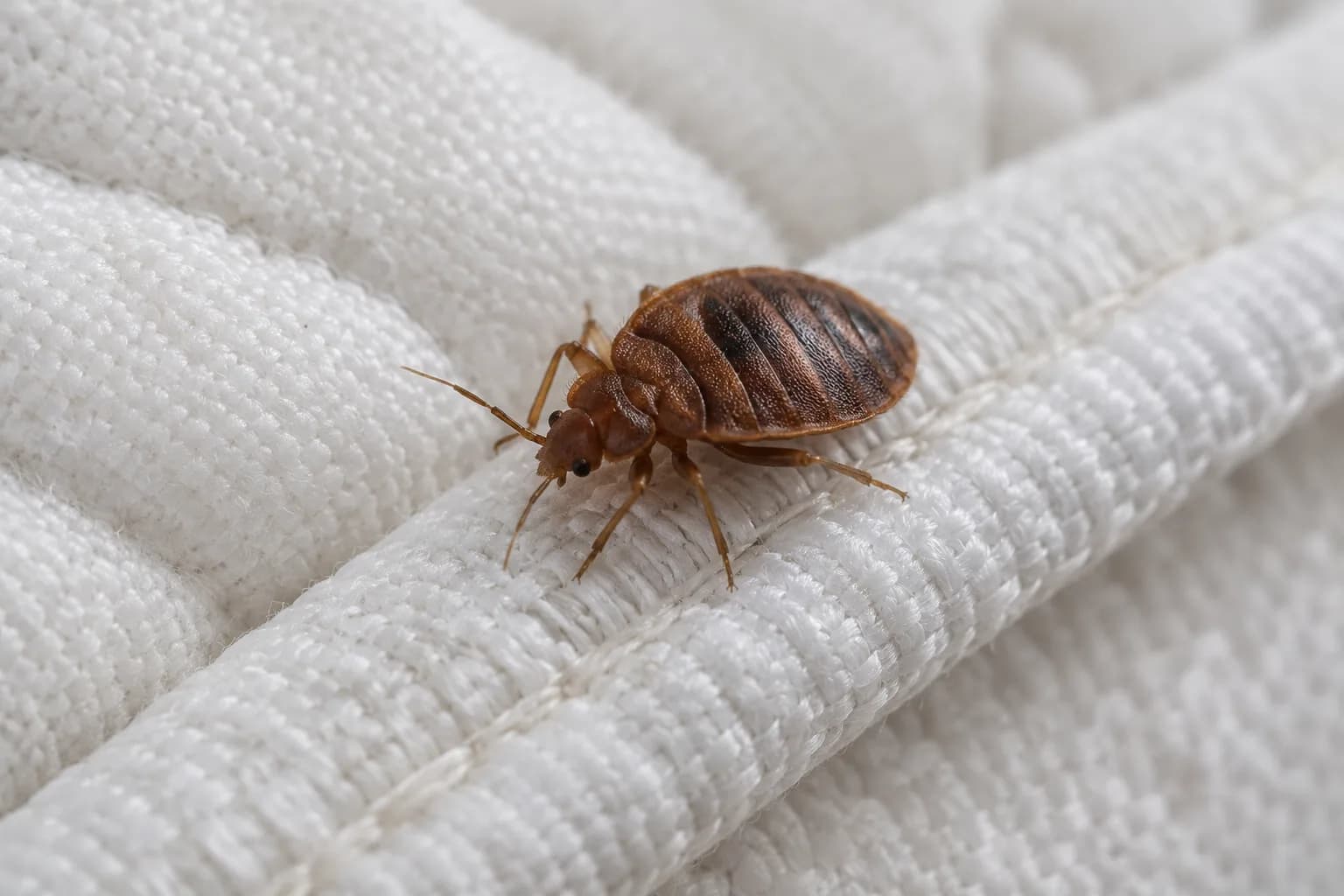 AI-generated editorial illustration; not a local job photograph or a scientific identification image.
Capturing each kind of evidence properly.
Different evidence needs different handling, and a few minutes of care makes each piece far more useful. Fecal spotting. Photograph in place with side lighting before touching it. If you want to test it, press a damp white cloth gently against a single spot; bed bug spotting bleeds outward into a brownish halo, while ink stays put and a crushed insect leaves a red smear. Photograph the cloth too. Do not wash the bedding until the inspection, or if you must, cut out and keep a small labelled section. Shed skins. These are fragile. Photograph in place, then lift one with the sticky side of a piece of tape and press it to white paper inside a sealed bag. Note the exact location on the bag. Eggs. About a millimeter, pearly, cemented in place. Photograph with maximum zoom and a scale reference; do not try to remove them, since they tear apart and become unidentifiable. Live or dead insects. The most valuable item. Trap under clear tape on white paper, or seal in a small bag. Write date and location on the outside. Refrigeration is unnecessary. If it is moving quickly, a piece of tape pressed down over it works better than trying to pick it up. Bites. Photograph with a date and something for scale, and log where on the body and when they appeared. Keep this separate from the evidence log, because bites support the picture but never establish it. Label every file and every bag as you go. Retrospective labelling is where documentation efforts usually fall apart.
Writing locations an inspector can use.
The difference between a usable location note and an unusable one is about ten extra words. Unusable: found something on the bed. Usable: location 3, inside corner of the box spring at the head end, left side when facing the bed, under the folded edge of the dust cover. The elements that make it work are a fixed reference point, a side, and a height or depth. Fixed reference points are corners, seams, joints, screw holes, edges, and fittings, not approximate distances. Sides need a stated orientation, so say left when facing the bed rather than just left. Height matters because the same wall can have evidence at baseboard level and at headboard level, and those suggest different things. Number every location and keep the numbers stable forever. If location 3 is the box spring head corner today, it stays location 3 through treatment and through every post-treatment check. That stability is what lets you say a location has been clear for six weeks, which is a statement nobody can make from memory. For each numbered location, record: date first found, evidence type, approximate quantity, your confidence as high, medium, or low, and the photo file names. Confidence ratings matter more than people expect. An inspector reading probable spotting, medium confidence knows what to verify, while a record claiming certainty it does not have is harder to work with. list the places you checked and found nothing. A documented clear search narrows where the inspector looks.
 AI-generated editorial illustration; not a local job photograph or a scientific identification image.
Building the exposure timeline and sending the package.
The timeline answers a question inspections cannot: where might this have come from, and when did it start. Write it as a simple dated list covering the previous three months. Include overnight travel with dates and accommodation type, overnight guests, any secondhand furniture, mattresses, or clothing brought in, items returned from a storage unit, deliveries of large furniture, and any visit to or from a home with a known problem. Then add when symptoms began, when the first evidence was found, and when you first suspected something. The list is not about assigning blame, and it frequently produces no clear answer. Its value is that it lines up dates against evidence, which occasionally makes a source obvious and more often rules out theories quickly. In a rental it also documents what you knew and when. To send the package, put everything in one message rather than several. A short summary paragraph first: how many locations have evidence, what kinds, which rooms, when it started, and what your strongest single piece of evidence is. Then the numbered location log. Then the photos, named to match the location numbers. Then the timeline. Mention that you have retained a specimen and can provide it at the visit. End with two questions: what do you expect to find based on this, and what would change the scope of the inspection. Written answers to those two give you something specific to compare against whatever is found on the day, and they start the working relationship with the provider on evidence rather than on impressions.
What affects the price
- Whether the inspection fee is credited toward any treatment.
- Number of rooms where you have documented evidence.
- Clutter and stored items that must be inspected.
- Whether a canine inspection is used for rooms with no visible evidence.
- Building type, since shared walls may prompt neighbouring inspections.
- Furniture complexity, particularly sectionals and upholstered headboards.
- How much of the inspection time is spent searching versus verifying.
When to call for help
Ask what evidence would widen the inspection to other rooms, so you know what a change of scope would be based on. A useful reply refers to your specific material: the spotting pattern you photographed at the box spring corner is consistent with harborage in the frame, so the inspection will start there and at the headboard, then check the chair and the wall void behind the bed. Send the package ahead of the visit and ask what the inspector expects to find. You do not need certainty; an inspection is how certainty is reached, and documented uncertainty is a perfectly good reason to book one. Call once you have physical evidence of any kind in any single location, or once bites have continued for two weeks with no evidence found despite careful searching.
What you can do yourself
Documentation is entirely yours, and it is the step with the best return on effort in the whole process. It costs nothing, requires only a phone and a flashlight, and it converts a vague call into a specific one. It also protects you later, since a dated record is the reference point for every subsequent judgment about whether things are improving. What you should not attempt is diagnosis or control. Do not conclude from a photograph that you definitely do or do not have bed bugs, since several things look similar and absence of visible evidence proves very little. Do not apply retail products, foggers, or alcohol-based sprays; they scatter insects, can push harborage deeper into the structure, and they will make your own careful documentation inaccurate within days. Collect, record, and hand it over.
Simple ways to keep bed bugs away
- Photograph anything suspicious the moment you see it, before deciding what it is.
- Keep one specimen even if you are fairly sure what you have.
- Write locations precisely enough that a stranger could find them.
- Put clean bedding on and note the date, so later spotting can be dated.
- Do not spray, fog, or treat anything before the inspection.
- Keep sleeping in the room unless advised otherwise; moving can spread activity.
- Do not discard mattresses or furniture before the inspection.
- Back up the photo folder somewhere other than your phone.
 AI-generated editorial illustration; not a local job photograph or a scientific identification image.
Did you know?
Bed bug fecal spotting bleeds outward on a damp white cloth.
Immature bed bugs are pale and easily mistaken for other insects.
Eggs are cemented in place and tear apart if removal is attempted.
Questions people ask
What evidence should I collect if I think I have bed bugs?
Send the package to the inspector ahead of the visit. Write down the exact location and date of each finding, and build a timeline of travel, guests, and secondhand items. Photograph any stains, shed skins, eggs, or insects with a scale reference before touching them, and keep one specimen sealed in a bag or taped to white paper.
How do I photograph suspected bed bug evidence?
Name the file with the date and the location number so photo and note stay linked. Take one close shot and one wider shot showing where it is. Use a flashlight held almost parallel to the surface so shadows reveal texture, brace the phone against something solid, and put a coin or ruler edge in the frame for scale.
Should I kill or keep an insect I find?
A specimen resolves identification far more reliably than a photograph, particularly for immature insects, which are small and pale and easily confused with other household insects. Trap it under clear tape on white paper or seal it in a small bag, and write the date and location on the outside. Keep it.
Should I clean the room before a bed bug inspection?
Inspectors need to see the distribution as it is, and cleaning removes exactly the material the assessment relies on. Normal tidying of floors is fine, but do not wash bedding you have photographed spotting on, do not vacuum the areas you want inspected, and do not spray anything. Document first, then leave the evidence in place.
Can I be sure it is not bed bugs if I find nothing?
A documented negative search is still useful information for the inspector. Document the search itself, noting which locations you checked and found clear, then have the room inspected. Finding nothing in a home search is common early on, because the insects are small, flat, and hidden in places a casual search does not reach. No.
What should renters document before reporting to a landlord?
Responsibilities vary by state and by lease, and the element most often missing in these conversations is a dated record of what was reported and when. Keep your own copy independently of the landlord's records. Everything above, plus the report itself: the date you notified, how you notified, what you said, and any reply.
Do people try to treat bed bugs themselves?
If you rent, report the problem to management first. Resident spraying tends to scatter bed bugs into neighboring units and can expose people to misused chemicals. It matches what pest professionals commonly see. That figure comes from low-income apartments in one state rather than a national sample. In a 2016 Rutgers University study of 2,372 apartments in 43 low-income buildings across four New Jersey cities, 59% of the 539 residents who had experienced bed bugs reported applying insecticides themselves. Very often.
Sources (5)
The facts in this article come from the public sources listed above. Every home is different, so ask the company you talk to about pricing and what’s included. Published by Bed Bug Exterminator · Updated September 11, 2026 · How we write these guides