Bed Bug Bites: ID, Treatment & Next Steps
Waking up with unexplained bites is unsettling. But bites alone aren't enough to confirm bed bugs—30% of people have no reaction to bites, while others mistake flea or mosquito bites for bed bugs. Here's how to tell the difference and what to do next.
Get Your Free Quote
Send your request to the provider-matching network. Response times vary.
Bed bug bites cannot be diagnosed reliably by appearance or pattern alone. Reactions range from no visible mark to itchy swelling and, rarely, severe allergy. Look for physical evidence near sleeping areas and consult a healthcare professional about significant or worsening symptoms.
Key Takeaways
- →Bite marks are not proof of bed bugs.
- →CDC says reactions may appear from one to several days later and sometimes take up to 14 days.
- →Avoid scratching and seek medical advice for severe or infected reactions.
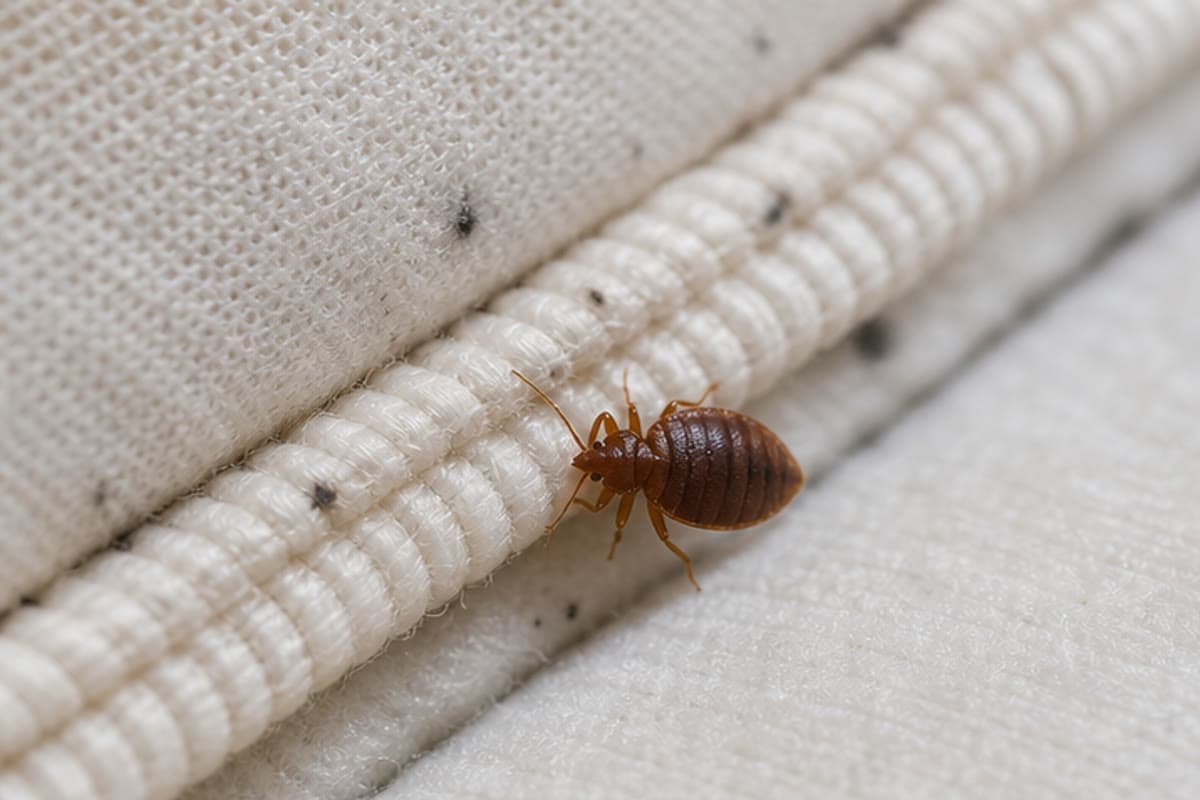
- →Pest identification requires an insect or other physical evidence.
Who This Is For
Anyone waking up with clusters of itchy bites. People unsure whether they have bed bugs or another pest.
The Problem
Bed bug bites appear in clusters or lines—often called breakfast, lunch, and dinner. They feed for 3-10 minutes while you sleep, then retreat to hiding spots. The bites themselves aren't dangerous but scratching can cause secondary infections.
Warning Signs
- •Bites in clusters of 3 or in a line
- •Bites on exposed skin—face, neck, arms, hands
- •Itching that worsens over several days
- •Bites appearing after sleeping in a specific location
Risks of Waiting
- ⚠Infestation grows while you treat symptoms instead of the source
- ⚠Secondary skin infections from scratching
- ⚠Sleep deprivation and anxiety
- ⚠Spreading bed bugs to other locations via luggage or clothing
Bite evidence and care check
Treatment Options
Professional Bed Bug Inspection
FreeConfirms bed bugs vs other pests. Identifies infestation extent. First step toward elimination.
Skin appearance is an unreliable pest identifier
People react differently to insect bites, and many skin conditions can resemble one another. CDC information notes that bed bug bite responses range from no visible sign to small marks or, rarely, serious allergic reactions. Marks may appear in a line, cluster, or random pattern, but those arrangements do not prove which insect was involved. Mosquitoes, fleas, mites, contact dermatitis, hives, medication reactions, and other causes can overlap visually. Photographs can document change for a clinician, yet an online image cannot establish that a bedroom contains bed bugs. Keep two records: a symptom record for healthcare and a physical-evidence record for pest identification. Combining them too early can lead to treating the wrong room, using unnecessary pesticides, or overlooking a medical issue.
Search for independent physical evidence
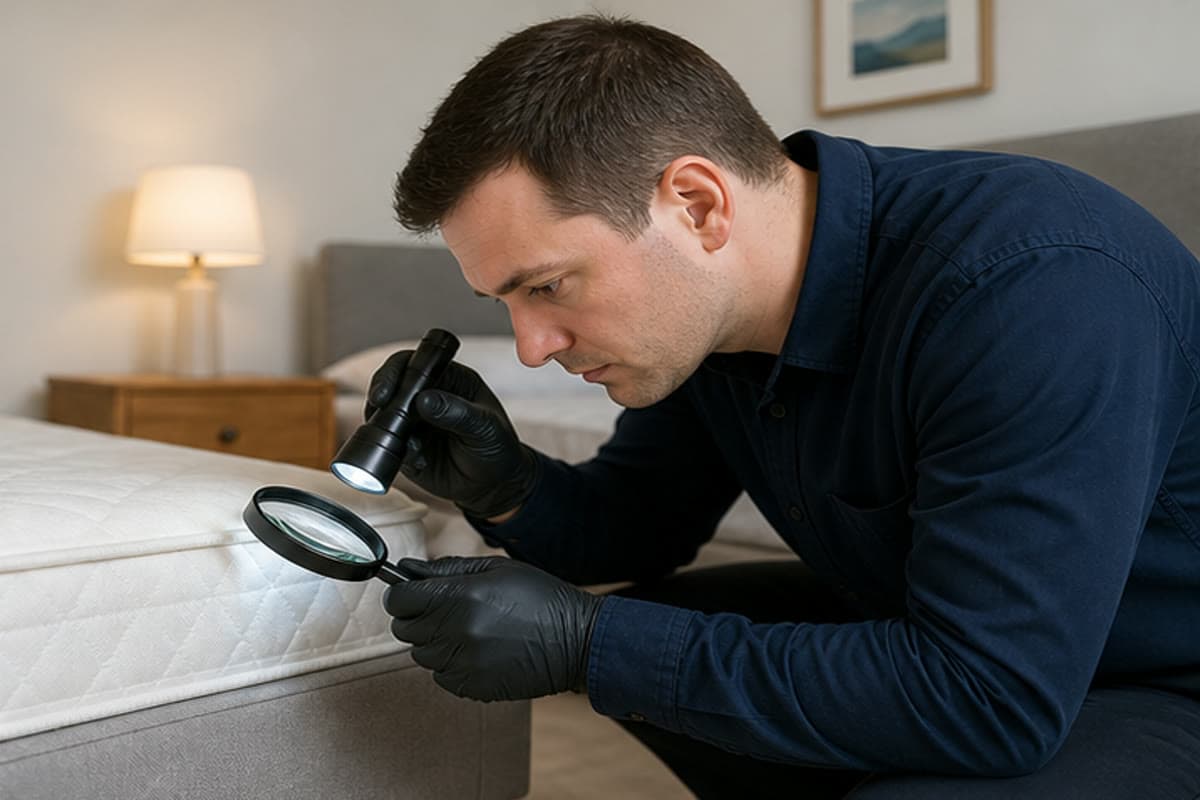
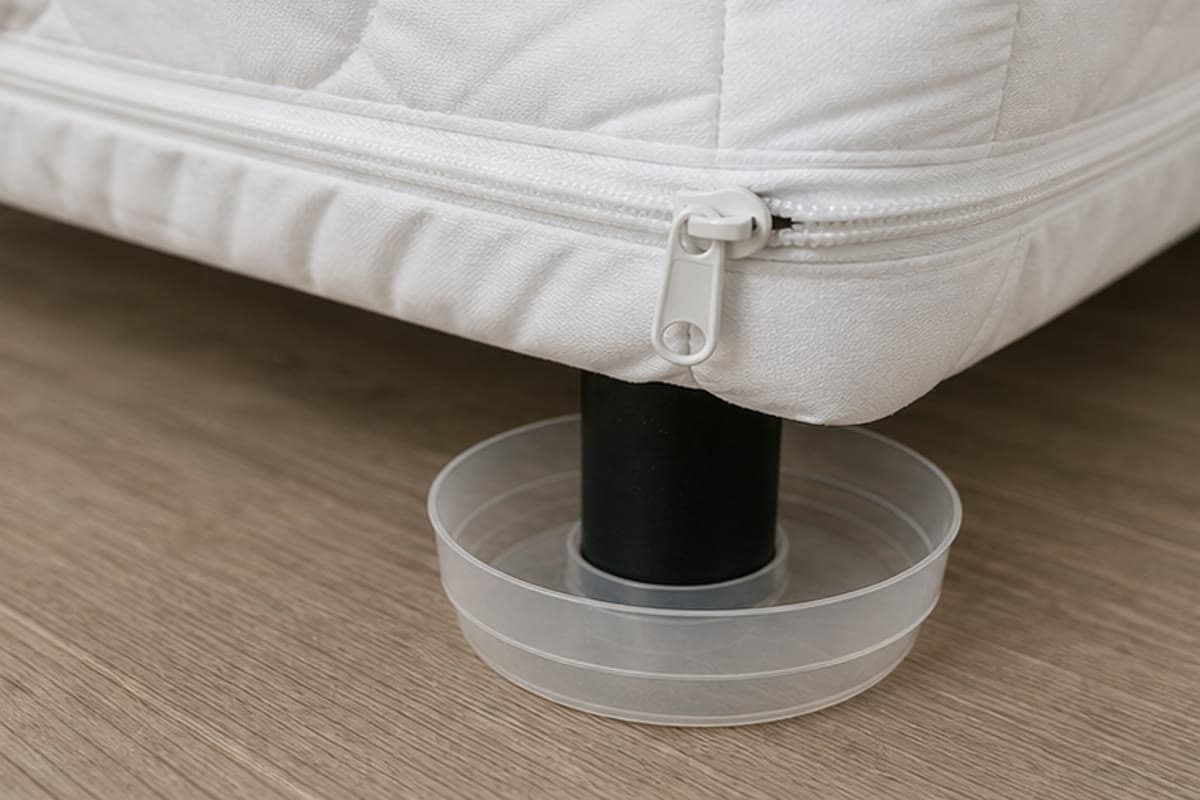
Inspect mattress piping, tags, box-spring edges, bed-frame joints, headboard attachments, nearby furniture, baseboards, and items stored close to where people sleep. Use a bright flashlight and a thin inspection card rather than flooding the room with spray. Look for live adults or nymphs, shed skins, eggs, and dark spotting. Capture uncertain insects on clear tape or in a sealed container. CDC DPDx states that identification of adults or nymphs collected near the affected area provides stronger confirmation than the inflammatory reaction. If evidence is absent, monitors or interceptor cups may help detect activity over time. An absence during one brief check does not prove the room is clear, but it is a reason to avoid declaring an infestation solely from marks.
Handle symptoms without turning pest guidance into medicine
Avoid scratching because broken skin can become infected. CDC clinical guidance says most bites need only minimal symptomatic care and good hygiene, but individual circumstances differ. A pharmacist or healthcare professional can advise on appropriate itch relief and evaluate severe, persistent, or unusual reactions. Seek urgent help for breathing difficulty or signs of a serious allergic response. Contact a clinician when redness, warmth, pain, drainage, streaking, fever, or other infection concerns develop. This page cannot diagnose a rash or recommend a personal medication. Keep the pest-control provider focused on identifying and treating the environment; keep medical decisions with qualified healthcare professionals.
Avoid spreading belongings while investigating
Do not move to another bedroom with loose clothing and bedding. Do not discard the mattress before inspection or carry untreated furniture through common areas. If travel items are suspect, isolate them carefully and obtain processing instructions. Laundering and dryer heat can be useful for suitable textiles when fabric guidance is followed, but clean items must be separated from untreated belongings afterward. In multi-unit housing, notify the appropriate property contact because adjoining areas may require coordinated assessment. The combination of careful evidence collection, measured medical response, and controlled belongings movement is more useful than trying to decode a bite pattern.
Maintain separate symptom and pest logs
In the symptom log, record the date noticed, body location, photographs under similar lighting, itching or pain, relevant products applied, and any healthcare advice. Avoid repeatedly photographing different marks as if each image proves a new insect. In the pest log, record captured specimens, shed skins, eggs, spotting, monitor findings, room and furniture location, and inspection results. The two timelines may overlap, but neither should be used to manufacture certainty in the other. A clinician can evaluate the skin without proving an environmental source. A pest professional can identify an insect without diagnosing the skin. If treatment occurs, continue recording physical evidence and monitor results rather than judging success only by new marks, which can have delayed or unrelated causes. This separation is especially useful in hotels, apartments, workplaces, schools, and care facilities where multiple people, rooms, and reporting responsibilities are involved. It protects the occupant from being dismissed while also protecting the investigation from an unsupported diagnosis.
Use neutral language when reporting a concern
Say that you found unexplained marks and are checking for bed bug evidence, rather than stating that a person or property caused bed bug bites. Neutral wording keeps the focus on identification, inspection, and care. It is especially important when communicating with property managers, hotels, schools, employers, or healthcare staff because an unsupported accusation can delay the practical response.
How Bed Bug Bites Properties Should Prepare for bed bug Service
Before a professional visit in Bed Bug Bites, clear access to baseboards, utility areas, kitchens, bathrooms, garages, crawl spaces, and any location where activity has been seen. Take photos of sightings, save damaged materials when safe, and note when the problem is most active. This helps the technician confirm the species, find nesting or entry points, and choose a treatment plan that matches the property instead of relying on a generic spray-and-leave visit.
Questions to Ask Before Booking bed bug Control
Ask whether the inspection is included, what treatment methods are being proposed, how follow-up visits are handled, and what conditions could change the price. For rental properties, restaurants, hotels, warehouses, and multi-unit buildings, ask whether documentation is provided after service. Strong providers explain the source of the problem, the treatment area, safety instructions, and prevention steps in plain language before work begins.
What Makes Bed Bug Bites bed bug Problems Different
Bed Bug Bites properties can have different pest pressure from block to block because of building age, landscaping, moisture, trash handling, nearby food sources, and how tightly entry points are sealed. A good inspection does not assume every property needs the same service. It checks the structure, surrounding conditions, activity level, and safety needs before recommending treatment.
Inspection Steps for bed bug Issues
A complete inspection should look at interior activity, exterior entry points, moisture conditions, food or harborage sources, nearby vegetation, storage areas, and any connected units or shared walls. The best inspection notes where activity is confirmed, where it is suspected, and what needs to change after treatment so the same issue does not return quickly.
Follow-Up and Prevention Plan
Professional pest control should not stop at one visit when the infestation risk is ongoing. Follow-up timing depends on the pest, severity, season, property type, and whether sanitation or exclusion work is still needed. A practical prevention plan may include sealing entry points, improving drainage, trimming vegetation, changing storage habits, and monitoring activity after service.
Bed bug identification, inspection, treatment, and monitoring in 29 seconds
A concise visual guide to confirming evidence, checking common harborages, understanding heat treatment, and monitoring after service.
Read the video transcript
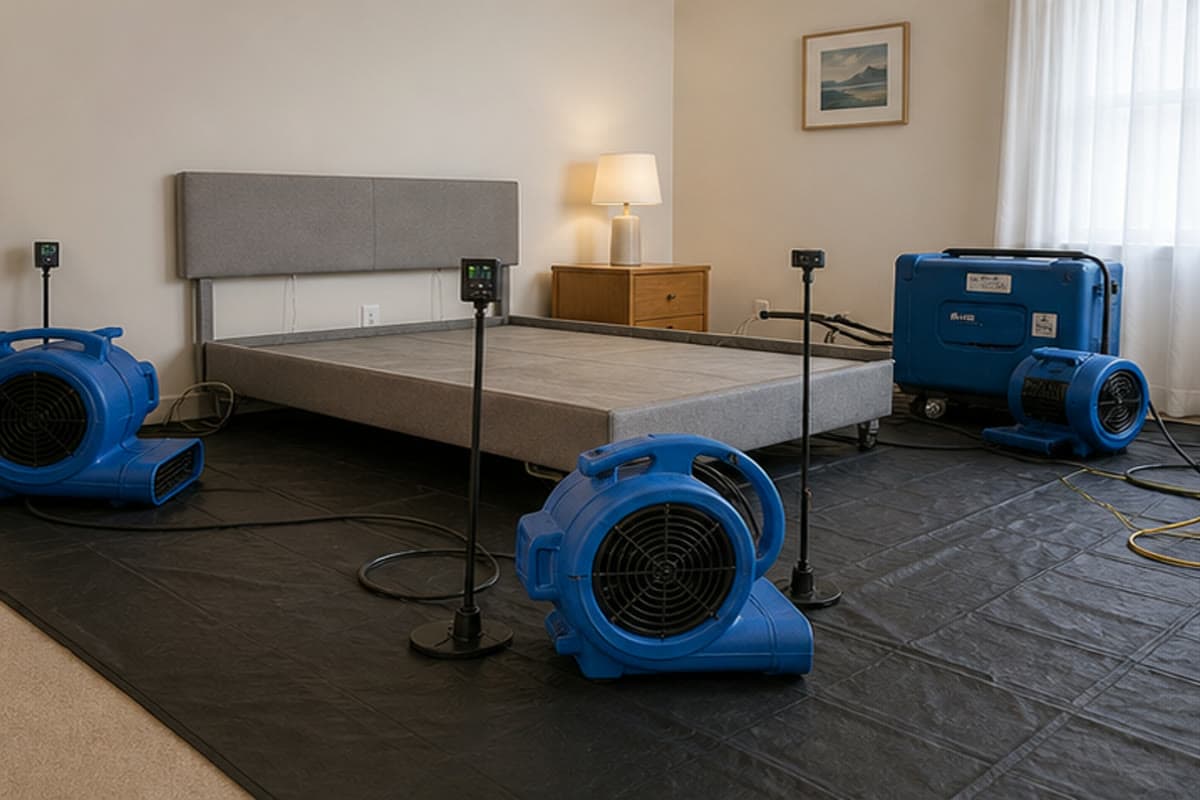
bed bugs are flat, reddish-brown insects. Confirm the insect or another physical sign instead of relying on bites alone. Inspection focuses on mattress seams, bed frames, nearby furniture, baseboards, and other narrow harborages close to resting areas. Heat is one professional option, but temperature monitoring and preparation are essential. Chemical and integrated approaches may also be appropriate. Use encasements and interceptors for monitoring, reduce clutter, and avoid moving untreated belongings into other rooms.
Bite concern versus appropriate evidence
| Observation | What it tells you | Next step |
|---|---|---|
| Itchy red marks | Possible insect reaction with many potential causes | Document symptoms and inspect for physical pest evidence |
| Marks in a line or cluster | Pattern may be suggestive but is not diagnostic | Do not identify the pest from pattern alone |
| Live insect or shed skin near bed | Stronger evidence for expert identification | Capture specimen or sharp photograph |
| Spreading redness, warmth, severe swelling | Possible medical complication | Contact a healthcare professional |
What information are you looking for after noticing bites?
When to Call a Professional
Call if you have recurring bites in clusters on exposed skin, especially after sleeping. Bites plus any other sign (stains, eggs, shed skins) means active infestation.
DIY vs Professional
DIY bite identification is unreliable—many insect bites look similar. Professional inspection confirms the pest species, which determines the correct treatment.
💡 Did You Know?
- ★bed bugs are not known to spread disease to people, although bites can cause itching, sleep loss, and occasional allergic reactions. (CDC)
- ★Cleanliness does not determine whether bed bugs are present; they can occur anywhere people and belongings move. (CDC)
- ★Bite appearance alone is not diagnostic. Finding and identifying an adult or nymph provides stronger confirmation. (CDC DPDx)
Frequently Asked Questions
How can I tell bed bug bites from mosquito bites?
Do bed bug bites transmit disease?
Can bites alone prove that bed bugs are present?
Should I sleep in another room after finding a bed bug?
Does a clean home prevent bed bugs?
Is heat always the best treatment?
What should I save for identification?
When should bite symptoms receive medical attention?
Related Pages
Request bed bug inspection and treatment options
Send the form to request matching with an independent pest-control provider. Availability, inspection charges, timing, and warranty terms vary by provider and market.